By Better Homes and Gardens Real Estate Treasure
Owning a home along the barrier island where North Topsail Beach, Surf City, and Topsail Beach meet the Atlantic is a rare kind of joy, and it comes with its own checklist before you sign. A coastal property behaves differently from an inland one, from the way it sits on its lot to the materials that keep it looking sharp year after year. Knowing what a qualified inspector examines helps you go into any showing with a sharper eye.
When you understand the inspection process ahead of time, you can ask better questions and picture the long game of ownership. Coastal homes on Topsail Island are designed with the shoreline in mind, and a thorough inspection confirms that every part of the home is doing its job.
Key Takeaways
- Inspectors on Topsail Island begin with the home's structure, foundation, and pilings, since elevation and support are central to coastal building.
- Exterior materials, including siding, windows, and roofing, are checked for the coastal-ready features that keep a home looking its best.
- Elevation certificates, flood zone designations, and lot drainage all factor into evaluating a coastal property on Topsail Island.
- Core systems, such as HVAC, plumbing, electrical, and any well or septic setup, get a close review in seaside homes.
- Understanding the inspection early helps you buy Topsail Island real estate with confidence and a clear plan.
What Do Inspectors Check First on a Topsail Island Coastal Property?
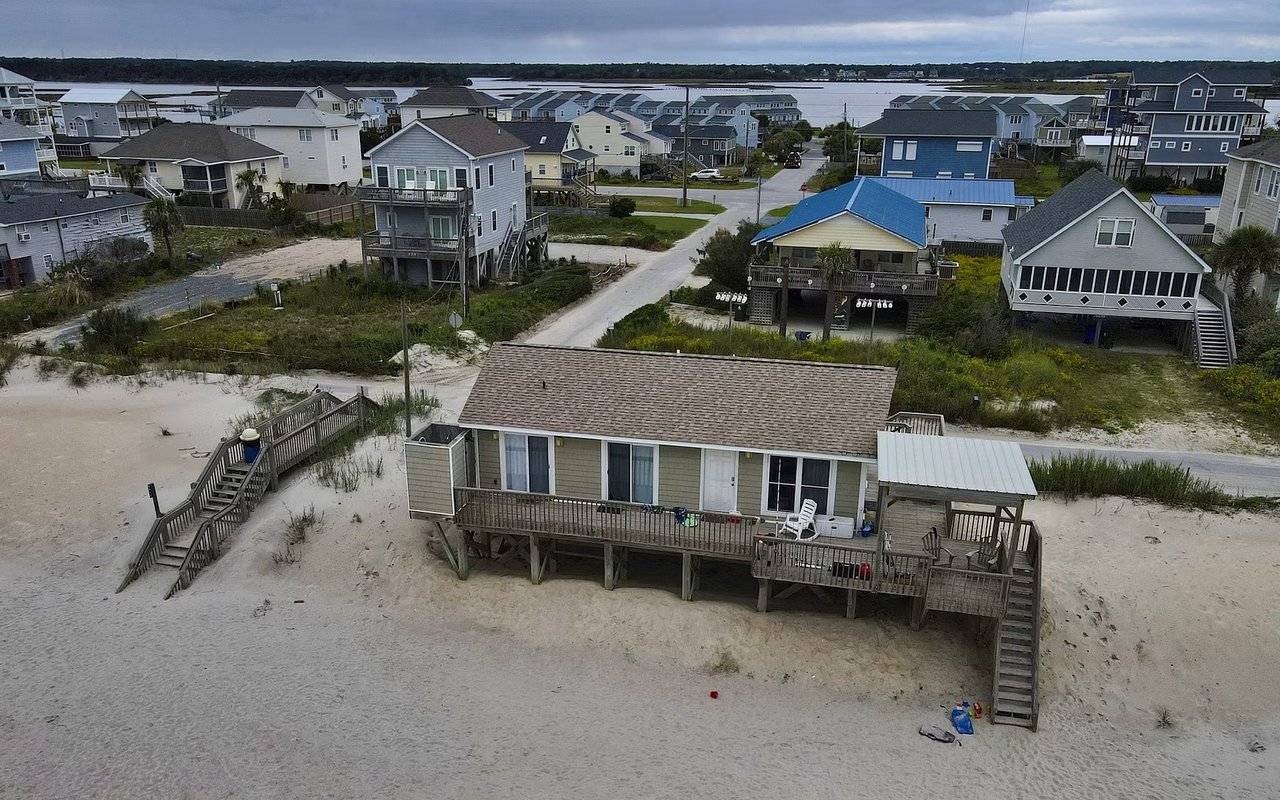
Inspectors evaluating a coastal property on Topsail Island begin with the home's structure, focusing on the foundation, pilings, and elevation that let a seaside home stand strong. This is the anchor of the entire report, because everything above rests on how well the home is supported.
Some homes across North Topsail Beach, Surf City, and Topsail Beach sit on pilings or elevated foundations, so an inspector will study how the home is supported and how level it sits. They review the connections between the frame and its supports, the condition of the pilings, and any signs that the structure has settled over time. A sound structure tells you the home has been built and maintained for its shoreline setting.
What Inspectors Look For
- The condition and alignment of pilings or an elevated foundation.
- Solid connections between the framing and the supports below.
- Level flooring and framing that show the home has held its shape.
How Do Inspectors Evaluate the Exterior on a Coastal Home?
Inspectors assess a coastal home's exterior by checking the siding, windows, roofing, and hardware for the coastal-ready materials that keep homes on Topsail Island looking their best. These are the details that reward a home with easy upkeep and lasting curb appeal.
Seaside homes are often built with materials chosen for waterfront living, such as fiber cement siding, impact-rated windows, and stainless or galvanized hardware. An inspector confirms these features are in place and performing correctly, along with the seals around the windows and doors. The roof gets a careful look, since it is the home's crowning layer above the shoreline.
Considerations
- Siding and trim made with coastal-ready, low-maintenance materials.
- Windows and doors with tight seals and appropriate ratings.
- Roofing in good condition with secure flashing and fasteners.
- Corrosion-resistant hardware, railings, and fixtures.
What Should You Know About Elevation and Drainage on Topsail Island?
Elevation certificates, flood zone designations, and lot drainage are key parts of evaluating a coastal property on Topsail Island. An elevation certificate documents how high the lowest floor of the home sits relative to the base flood elevation, which matters for insurance and long-term planning. Many properties across Topsail Island carry these certificates, and reviewing one early gives you a clear picture.
Inspectors also study how water moves across the lot, from the grading around the foundation to the driveway and the yard. Thoughtful drainage keeps a coastal home comfortable and easy to maintain, and we will help you weigh these details as you compare homes on Topsail Island.
What To Review
- The home's elevation certificate and base flood elevation.
- The flood zone designation for the specific address.
- Grading around the foundation and along the driveway.
- Gutters, downspouts, and where water drains across the lot.
What Systems and Utilities Do Inspectors Assess in a Coastal Home?
Inspectors evaluate the HVAC, plumbing, electrical, and any well or septic systems when evaluating a coastal property on Topsail Island. These are the working parts that make daily life on the island comfortable and dependable.
Heating and cooling systems in coastal homes are checked for performance and for the coastal-rated components that help them run efficiently near the water. Plumbing and electrical systems are tested for function, proper connections, and up-to-date standards.
Some homes on Topsail Island rely on a well or septic system, so an inspector will confirm that these are working and well-maintained.
How It Works
- HVAC systems tested for performance and coastal-rated parts.
- Plumbing checked for function, pressure, and sound connections.
- Electrical panels and outlets reviewed for current standards.
- Any well or septic system confirmed to be working as expected.
FAQs
Do Coastal Homes on Topsail Island Need a Special Type of Inspection?
Coastal homes on Topsail Island benefit from an inspector who is experienced with elevated foundations, pilings, and waterfront building details. A standard home inspection covers the essentials, and a coastal-savvy inspector adds the shoreline-specific knowledge that helps you understand a beach property fully.
What Is an Elevation Certificate, and Why Does It Matter for Topsail Island Real Estate?
An elevation certificate records how high a home's lowest floor sits compared to the base flood elevation. For Topsail Island real estate, it plays a role in insurance and long-term planning, so having it in hand early makes evaluating a coastal property much smoother.
How Long Does a Home Inspection Take on a Topsail Island Coastal Property?
A home inspection on a Topsail Island coastal property usually takes a few hours, depending on the size, features, condition, and age of the home. Elevated foundations, additional systems, and exterior details can add time, and that thoroughness works in your favor as a buyer.
Buy a Topsail Island Coastal Property With Confidence
Evaluating a coastal property on Topsail Island comes down to knowing what a skilled inspector examines, from the pilings and exterior materials to the elevation, drainage, and core systems. When you understand each piece, you can look at homes across
North Topsail Beach,
Surf City, and
Topsail Beach with a confident focus.
Our team at
Better Homes and Gardens Real Estate Treasure knows
Topsail Island real estate inside and out, and we would love to guide you through every step of finding and evaluating your coastal home. Reach out to us today, and let us help you turn a beautiful stretch of the North Carolina coast into the place you call home.